The Biggest F&B Trends in 2026 We Cannot Wait To Try

49 Interested |
26  Views

For a while now, eating and drinking out in India has felt like a competitive sport. New openings every weekend. Menus longer than novels. To be seen via QR codes, making it worse! Concepts that sound like pitch decks. And restaurants that feel like they were designed for a reel first, and a repeat visit… maybe later. And I stress on the “maybe”. But 2026? Different vibe. 

This is the year Indian hospitality looks like it’s going to stop trying to be the loudest in the room and start trying to be the most considered. Less chaos. More craft. Less performative. More personal. Less “look at us”, more “this is who we are”. Here’s all you need to know about how India will be drinking and dining in 2026.

Trend #1: Gimmicks Are Tired (Yes, Even The Aesthetic Ones)

Let’s just say it: the gimmick-first restaurant has overstayed its welcome. We’re all for a vibe. We’re all for a little drama. But if your entire personality is “pink neon sign + dry ice + 72-item menu”… it’s giving 2019.

In 2026, diners are craving something slightly radical: substance. In a world where “Instagrammable” is the baseline, restraint is the new cool. The food needs to slap even when nobody’s filming it. 

Because “Instagrammable” is no longer rare. It’s the baseline. You can already see that. PartTwo, a new opening on Lavelle Road, Bangalore, that’s technically a “new chapter” of The Biere Club (India’s OG microbrewery), but feels like it’s aiming for a different audience entirely. The most refreshing thing about it? It’s not trying to be a personality. In fact, they are a “no-concept concept” which sounds like a contradiction until you realise what they mean. KOJAK, the new Juhu cocktail bar led by mixologist Ratan Upadhyay, is built for intentional eating and drinking with technique-forward cocktails (clarification, fat-washing, distillation) and a tight sharing-plates menu. Then there’s Tulsi in New Delhi. An entirely vegetarian spot near Tulip Chowk, this one reworks familiar Indian favourites with small twists. 


These places are not locking themselves into a rigid idea. Instead, it’s built as a fluid space that evolves – with seasonal menus, long takeovers (not weekend pop-ups), and consistency.

Trend #2: Small, Intimate & Immersive Beats Big & Loud

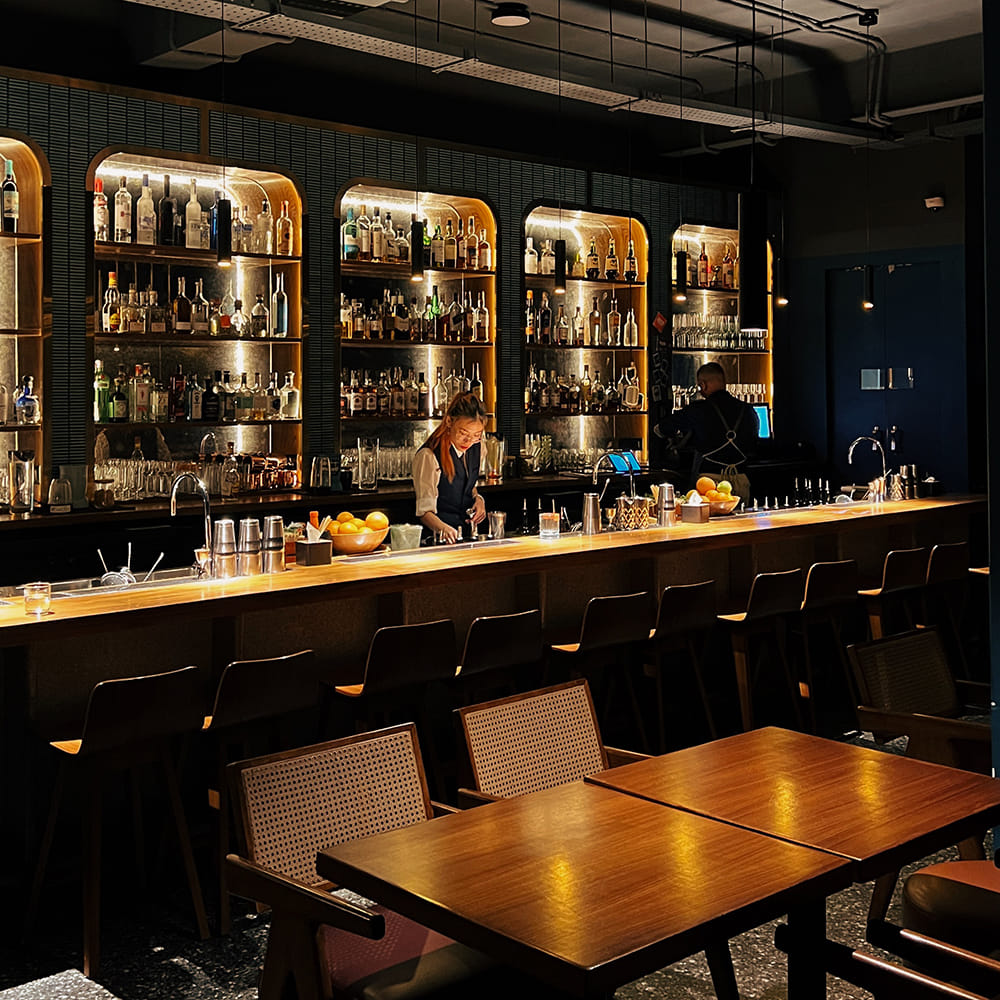
A quiet revolution is happening across India: smaller rooms are winning. Not everyone wants a 200-seater with a DJ auditioning for Tomorrowland. In 2026, the new luxury is attention. Being hosted properly, hearing your own conversation, and staying because you want to, not because the place is “happening.” 

“You can see the trend is shifting, and it’s shifting strongly, to smaller set ups. Founders, chefs, mixologists…everyone is getting more deeply involved into the whole space,” says Chef Kavan Kuttappa of Naru Noodle Bar and Bar Doubble. In fact, Bengaluru seems to be leading this change with spaces like Bar Doubble that fits the same mood. It’s positioned as a neighbourhood cocktail bar built on craft and warmth, not spectacle. “We’re not seeing cookie-cutter restaurants and bars. We have places now looking to give you an entire experience, beyond just the food and drink” he says, adding that Idoru in Mumbai is one of the latest to join the “less is more” concept. Even the little Papa’s in Mumbai doesn’t behave like a restaurant. “At the core, it is a curated ritual. It’s a tiny chef’s counter that feels like a dinner party, with food, cocktails, music and energy choreographed into a single immersive format,” Kavan says, adding that it’s about quietly creating a world people want to return to.

Another such place is Americano, which has built a reputation around a tight bar programme and a room that feels social without trying too hard. Delhi is evolving too. Upstairs (Indian Accent, The Lodhi) the martini bar that opened in 2025 is literally built for this trend: a small, 36-seat bar above Indian Accent that leans into intimacy, not chaos. It’s designed like a late-night enclave–tight reservations, low-lit glamour, and a menu that’s about precision and restraint rather than spectacle. It’s immersive because it forces the night to slow down; you’re not “out”, you’re in something carefully created.

Trend #3: Restaurants Are Becoming Ecosystems, Not Just Dining Rooms

A restaurant used to be all about “food + service + vibe”. Now the best ones feel like micro-universes. One look at Subko LoCol in New Delhi and you’ll see how easily it brings together coffee, a bakehouse, plus its “Dukaan” and a dedicated cacao section). What makes it trend-relevant is simple: the experience doesn’t end when you leave. You can take it home, gift it, collect it, and come back for a different kind of engagement each time. 

“Hospitality will no longer end when the meal does. The most meaningful restaurants will find ways to stay with guests, through thoughtful takeaways, collaborations, shared meals, and stories that live beyond the dining room,” according to Hussain Shahzad, Executive Chef, Hunger Inc. Hospitality (best known for Papa’s, The Bombay Canteen, O Pedro & Veronica’s),  

The Lizard King Brewing Co. in Goa, is another great example. A brewpub ecosystem: beer + music + community under one roof, explicitly built as a culture space rather than “just a brewery.” And why it works is the beer isn’t separate from the experience. It’s tied to programming, identity, and repeat rituals. It’s not built for novelty, it’s built for belonging. Even Oya’s Umami Café, also in Goa builds its universe through flavour culture with ferments, smoking, Naga-rooted ingredients, making it a place with depth, not just dishes.

Trend #4: People Aren’t Chasing Places, They’re Chasing Presence

The year 2025 made one thing clear: India’s nightlife is splitting in two. The loud, performative “scene” still exists, but a growing audience is actively opting out because constant noise, constant social performance, and alcohol-as-the-entry-ticket is exhausting. What’s rising instead is presence-led hospitality: spaces designed to slow you down, hold your attention, and make you feel like you’re in an experience, not just consuming one.

Of course it will always be about the food and the beverages - alcoholic or zero-proof. But it is now also about that one extra step to make it a complete experience, Chef Kavan tells us, adding that when a guest leaves the space, they need to be able to tell a story of their night out or of their experience. “You can see it in the little things. The Chef’s tables. The restaurant collaboration. Or even something as simple yet powerful as good audio,” he explains, suggesting that restaurants and bars are investing in those hi-fi audio instruments to ensure the music is on point. “It’s the reason listening rooms are cropping up. And a great example is The Middle Room,” he says of his neighbours on Double Road. The music isn’t background; it’s the whole point, built around high-fidelity listening and curated sessions. 

Mumbai has the same cultural move with The Dimsum Room’s Listening Room, where vinyl and acoustic design turn dinner into focused, shared attention not distraction dining. Delhi’s Mamma Killa takes it further with privacy and a no-photos attitude. An intentional pushback against “being seen.” (We appreciate ethos so much!) And again Idoru. Just more proof that a tiny, understated room built around music culture and intimacy, not spectacle, will come out the winner. 

That’s 2026 hospitality thinking done right.

Trend #5: The Beverage Menu Is Finally The Main Character

If you needed proof that drinks aren’t “secondary” anymore, the awards circuit basically handed it to us. The special awards at the 30 Best Bars India 2025 this year mirrored the exact shift we’re seeing on the ground: beverage programmes are becoming a serious marker of excellence, not an add-on. A brand-new wine category debuted and honoured Captain’s Cellar at The Taj Mahal, New Delhi, Wine in Progress in Bangalore, and Indian Accent in Mumbai which is a big signal that wine-led hospitality is being recognised across both hotel and independent formats. This is what 2026 looks like: the best places aren’t just good at food, they’re good at taste, and that includes what’s in your glass. Drinks are no longer the supporting act. They’re where a restaurant’s point of view shows up most clearly.

Back in Bangalore, Bar Spirit Forward and Soka swooped in to take the top two spots at the Best Bars in India awards. One look at the menu and you’ll see why. No “classics” only. No wannabe concoctions that just confuse you. Soka builds drinks like Cheese Cherry Pineapple (pineapple + cherry + cheese), Next-Gen Martini, and Mofo Don as tributes to local culture and memory, while Bar Spirit Forward (by Arijit Bose) leans into spirit-forward (surprise!) precision where every modifier be it vermouth, bitters, tinctures, washes, all have a reason to exist. Bar Doubble too reflects that, with Vedant Mehra and Chef Kavan finding the perfect balance of food and drink, neither overshadowing the other. Mehra’s mixes are playful and most of Bangalore will love them – the names and the flavours. Yaake, Lalbagh (a delightful floral gin matcha, honey and lime) and Plum-It, a plum-infused whisky, there’s plenty to love even if you skip on Chef Kavan’s food (don’t though!).

Trend #6: Premiumisation of Homegrown (Indian Spirits 2.0)

This one deserves its own moment. For the longest time, “imported” automatically meant “better” in India’s luxury bar scene. But by 2026, that hierarchy is collapsing—not because people are being patriotic, but because Indian spirits have levelled up. Real craft. Clear identity. Distinct profiles that don’t try to behave like international incumbents. The proof of this? Diageo India acquired a majority stake in Nao Spirits (makers of Greater Than and Hapusa). This is mainstream premium demand being validated at scale. “​“For a long time, "imported" meant "better" in the Indian luxury bar scene. By 2026, that narrative will be fully flipped. We are seeing a massive surge in guests at PCO (Pass Code Only, New Delhi) specifically requesting high-end Indian craft spirits over international incumbents—not because they are local, but because the quality is world-class,” says Rakshay Dhariwal, Founder & Managing Director, Maya Pistola Agavepura. “We are seeing this clearly even with the "New World Agave" movement. Guests are moving past the idea that agave must come from Mexico. At our bars, Maya Pistola Agavepura has become a requested pour because it offers a terroir unique to the Deccan Plateau. In 2026, expect to see top cocktail bars globally featuring Indian agave and whiskies on their "Top Shelf" lists, not just in a "Local" section,” he adds. 

So, what can you expect your weekends to look like?Think smaller spaces, tighter reservations, and formats that feel curated rather than chaotic. More listening sessions, chef-led counters, takeovers that last longer than a weekend, and menus (food and drinks) that are shorter but smarter. You’ll see bars putting the room and the experience first, not just the buzz. And you’ll see restaurants behaving more like cultural spaces – hosting, collaborating, and building communities instead of chasing footfall. You can complement that with savouring the moment and not just for the ‘Gram!

img-user-aakanksha
13761 Followers

Part-time writer and full-time dreamer. If you love coffee, travel, books, hikes and hot chips, we'll get along just fine!