
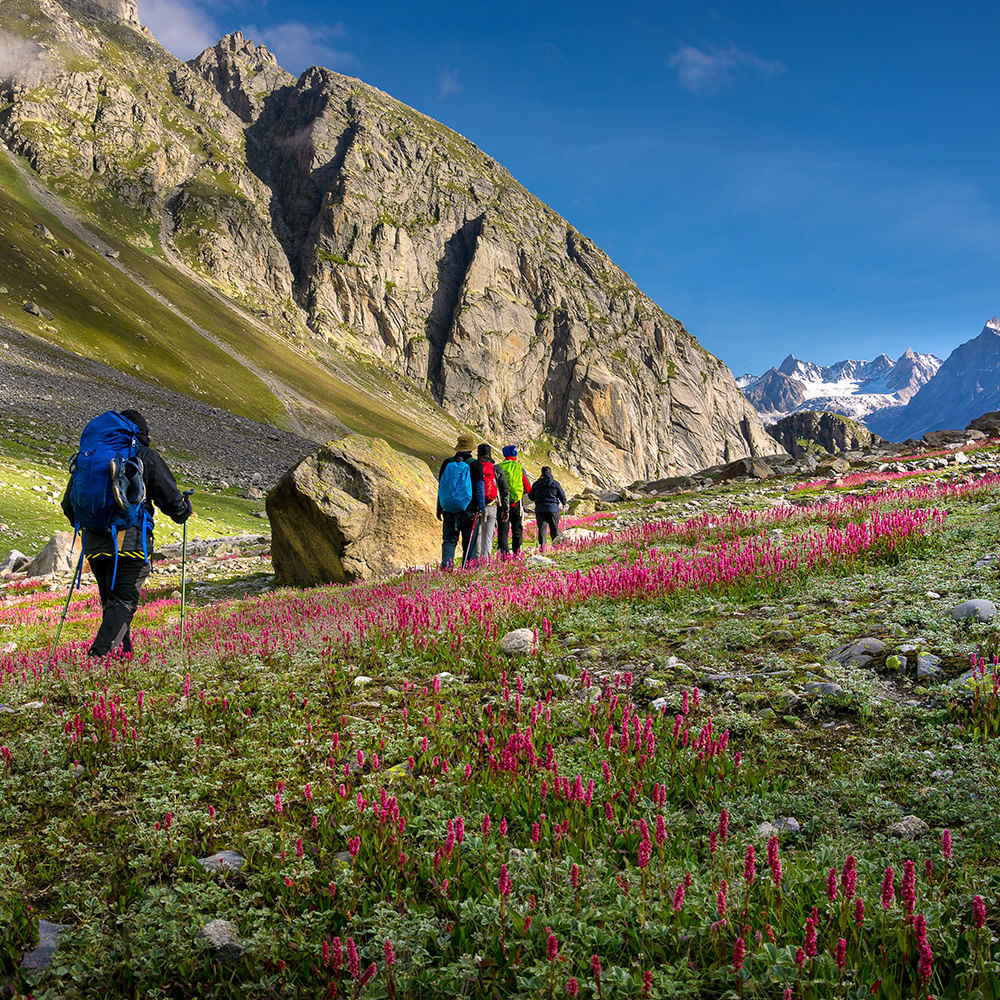
8 Lesser-Known Alternatives To Popular Himalayan Treks In India

480 Interested |
9.9K  Views

If there’s one thing India is highly famous for, it’s the Himalayan range. Something no one can really find any faults in, something we Indians wear like a badge of pride, something that makes us pack our bags in a jiffy to find peace, because therapy is expensive. It’s the peaks in the middle of chaos that turn us into adventurers, hikers, go-getters, and risk-takers. That’s the impact mountains have on us.

While the adventure factor is still very much there, we need to talk about how some treks have become so crowded, it’s like finding a slice of the city in the mountains. And isn’t that exactly what we’re trying to escape? But there we are, standing in a queue for a summit photo, cropping people out.

But again, India has a lot, a lot more to offer beyond these crowded trails. And to help you and me explore the best ones, I did a whole lot of research and reached out to people who trek every other weekend.

Here’s all the good stuff I found, the best, lesser-known alternatives to popular Himalayan treks in India!

Skip Hampta Pass, Choose Miyar Valley Trek

Hampta Pass is often described as a low-to-moderate crossover trek from Kullu Valley to Spiti Valley. While the views at the campsites are undeniably stunning, the experience can get a bit crowded. Expect plenty of people around you, which tends to block more than just the view.

In stark contrast is the Miyar Valley Trek. It’s expansive, filled with untouched valleys and beautiful riverbeds. Those long walks lead you deep into the heart of Lahaul Valley, where everything feels more meditative than exhausting. It’s so secluded that at times all you’ll hear is the sound of the river and the occasional shepherd. The trails are surrounded by lush greenery mid-year, so plan your trek during the monsoon season for a truly heavenly experience.

Difficulty: Moderate

Best Time: June to September

Average Trek Duration: 7-8 Days

Average Trek Distance: 60 km

Highest Altitude: 13,202 feet

Skip Kedarkantha, Choose Phulara Ridge Trek

The beginner-friendliness and ease of access make Kedarkantha one of India’s most crowded winter treks. It’s a rewarding experience for anyone new to the world of trekking so naturally, you can expect heavy crowds, fixed camps, and trails worn down by too many boots.

On the other hand, there’s Phulara Ridge—basically an extension of Kedarkantha. It offers a continuous high-altitude ridge walk with clearer, uninterrupted 360-degree Himalayan views. With limited foot traffic, better campsites, and diverse forest sections, it’s the quieter, more scenic sibling you didn’t know you needed.

Difficulty: Easy to Moderate

Best Time: May to June, September to November

Average Trek Duration: 5-6 Days

Average Trek Distance: 27-30 km

Highest Altitude: 12,150 feet

Pro-Tip12 Winter Treks To Try If You're Up For Some Adrenaline Rush

Skip Triund, Choose Khaliya Top Trek

Triund’s easy accessibility from Dharamshala and McLeod Ganj has made it increasingly crowded over the years. Nearly a hundred trekkers head up daily, making it hard to enjoy the serenity. Garbage piles and noisy nights have started to defeat the whole point of trekking.

To escape the buzz, head to Khaliya Top instead, a higher-altitude ridge near Munsiyari in Uttarakhand, where you’ll be surrounded by snowy views of Panchachuli, Rajrambha, and Nanda Devi. And don’t worry, you won’t miss out on rhododendrons; the trails are lined with blooming forests that make the journey just as beautiful, better even.

Difficulty: Easy to Moderate

Best Time: March to June, September to November

Average Trek Duration: 3-4 Days

Average Trek Distance: 12 km

Highest Altitude: 11,483 feet

Skip Tungnath-Chandrashila, Choose Satopanth Lake Trek

A religiously significant trek, Chandrashila (literally meaning “Moon Rock”) is the summit above the Tungnath temple in India. Since it’s an easy trek, there’s a steady flow of pilgrims throughout the season.

But if you’re seeking the same sense of sacredness sans the crowds, consider the Satopanth trek instead. This high-altitude lake trek in Garhwal takes you through glacial valleys, past the Vasundhara Falls, and into campsites nestled beneath the Neelkanth and Chaukhamba peaks. While it’s more physically demanding than Chandrashila, the raw beauty and the quiet journey make every step worth it.

Difficulty: Moderate to Difficult

Best Time: May to June, Mid-September to Early October

Average Trek Duration: 5-6 Days

Average Trek Distance: 30-40 km (depends on the starting point)

Highest Altitude: 15,100 feet

Skip Valley of Flowers, Choose Ali Bedni Bugyal Trek

The beauty of the Valley of Flowers, especially during peak bloom is undeniable, but it also brings the issue of over-tourism. Add to that fenced paths and strict forest department regulations (not dissing those, they’re doing their job to protect the ecosystem), and the overall experience might fall short of a perfect 10/10.

If you’re okay letting go of the iconic flower walls and skipping the crowds, go for the Ali Bedni Bugyal trek instead. This trail offers some of the most dramatic alpine meadows and far better views of the Trishul and Nanda Ghunti peaks. It also winds through dense oak and rhododendron forests, making the journey just as scenic, if not more.

Difficulty: Easy to Moderate

Best Time: May to June, September to October

Average Trek Duration: 4-5 Days

Average Trek Distance: 31 km 

Highest Altitude: 12,550 feet

Skip Nag Tibba, Choose Dev Kyara Trek

Nag Tibba has become Delhiites' favourite microadventure. The trail is short, requires no prior experience, so don’t be surprised to see even school outings happening here. And that’s exactly why it’s now highly commercialised with dozens of fixed campsites and, if I may say it out loud, noise pollution.

Now, Thatharana is what Nag Tibba used to be before it blew up. You get the same panoramic Himalayan views, minus the overbuilt camps and rush of people. The trek starts from Kharota village and takes you along a quiet grassy ridge. The stillness is really the star here!

Difficulty: Moderate

Best Time: March to June, September to November

Average Trek Duration: 2-3 Days

Average Trek Distance: 10 km (5 km climb)

Highest Altitude: 8,530 feet

Skip Rupin Pass, Choose Lamkhaga Pass Trek

Rupin Pass has become a go-to for hardcore trekkers, which means you can now expect overcrowding and trail erosion during peak season.

For a more secluded Himalayan expedition, head to Lamkhaga or Borasu Pass instead. These routes offer glacier crossings, high-altitude thrills, and a traverse between Himachal and Uttarakhand (or vice versa), making the entire experience one to cherish forever. 

LBB Tip: These treks are not for the faint-hearted; they’re recommended only for seasoned, serious trekkers.

Difficulty: Difficult

Best Time: May to June, September

Average Trek Duration: 9-10 Days

Average Trek Distance: 90 km

Highest Altitude: 17,323 feet

Skip Har Ki Dun, Choose Ruinsara Tal Trek

Har Ki Dun has become one of the most over-trekked trails in Uttarakhand in recent years. The route is now swamped with campsites and mules.

But just before the final stretch to Har Ki Dun, there’s a detour that barely anyone takes — Ruinsara Tal. And that’s where the magic lies. Along this quieter trail, you’ll often camp by rivers, beneath cliffs, or in open meadows. The path eventually leads to the glacial lake of Ruinsara, set against the backdrop of Kalanag (Black Peak) and the Bandarpunch massif. It’s views after views after views!

Difficulty: Moderate

Best Time: May to June, September to October

Average Trek Duration: 7-9 Days

Average Trek Distance: 64 km (approx. 10 km per day hike)

Highest Altitude: 11,850 feet

img-user-riya-narula-903150474474
104 Followers

A literature and fashion grad who is powered by mitochondria and mocha. With almost 4 years of experience in writing all things fun, this is your spot for the top-notch recs!