Doomscrolling, brainrotting and having no plans for the weekend—yes, we have all been there. You need a plan where you can get some fresh air, try some new meals, enjoy some treats, and generally get away from monotonous meetings and working on your laptop. What if we told you that we've put together a list of road trips around Kolkata that are exciting not just with your family and friends but also on your own? There is absolutely something for every mood, from eco-resorts to beaches, hills, and famous landmarks to Instagram-worthy heritage bungalows. Just pack your bags, book a room, and begin your vacation from Kolkata to these 16 locations where leisure meets adventure.

16 Weekend Getaways In And Around Kolkata That Mix Leisure & Adventure
Overview
- 1. Daringbadi
- 2. Gangani
- 3. Shantiniketan
- 4. Sundarbans
- 5. Mungpoo
- 6. Dooars
- 7. Garh Panchkot
- 8. Jalpath
- 9. Giridih
- 10. Raichak
- 11. Serampore
- 12. Puri
- 13. Murshidabad
- 14. Taki
- 15. Bandel
- 16. Mayapur
Here Are 16 Locations In & Around Kolkata That Need Your Attention
Daringbadi
Known as the "Kashmir of Odisha," Daringbadi is a scenic hill station in the Kandhamal district of Odisha, India. It is well-known for its temperate environment, coffee plantations, and verdant surroundings. The area was formerly governed by a British officer named Daring Saheb, hence the name Daringbadi. The region was eventually referred to as the village of Daring. The Doluri River meanders through forests with tiny waterfalls, and Mandasaru Kuti offers expansive views of the hills. Putudi Falls is a picturesque waterfall excellent for hikes, and Belgian Village, perched atop pine-lined hills, is a paragliding paradise. Harabhangi Dam is perfect for picnics by the hills, Belghar Sanctuary is teeming with animals, and Taptapani Sulphur Springs are renowned for their therapeutic waters.
Best Time To Visit: November to February and June to September
Things To Do: Forest bathing in the woods of Silent Valley, eat at Glass Garden restaurant, birdwatching excursions, or take in the breathtaking morning vistas from the hills, guided treks or jungle safaris
LBB Tip: Daringbadi is well-known for its premium organic turmeric, which has earned it the G.I. designation.
How To Reach: The nearest railway station is Berhampur Railway Station, which is 130 km away. Phulbani, which is 105 kilometres away, is the closest major bus stop. Regular state-run and private buses travel to Phulbani from neighbouring towns and cities throughout the state. Biju Patnaik International Airport, Bhubaneswar, located 290 kilometres away, is the closest airport.
Gangani
When you travel up to Gangani in Garhbeta, West Midnapore, you'll understand why it's known as the Grand Canyon of Bengal. Along the River Silabati, there is a deep gorge of red clay that has been sculpted by wind and water over many years. With patches of white sand, the cliffs appear untamed and unique. A government-constructed stairway leads you down; the red dirt gradually turns yellow. According to the locals, this area was constructed when a monster named Bakasura dwelt here and was vanquished by Bhima from the Mahabharata. From the riverbank, the cliffs climb sharply. Photographers will love this. The luxuriant foliage and the unusual reddish-brown laterite soil. For both adults and children, a trip to Gangani can be educational.
Best Time To Visit: October to March
Things To Do: Visit the surrounding cultural sites in Garhbeta, such as Krishnarai Jiu Temple, Raikota Fort, and Sarbamangala Mandir, watch the sunsets, walk by the river, go for hikes, visit Chilkigrah Raj Palace
How To Reach: Drive approximately 170 to 180 km on NH-6 to Kolaghat, and then continue on NH-60 through Salboni or Midnapore to Garhbeta. You can also take the Rupasi Bangla Express that departs from Satraganchi station or board the Aranyak Express, which departs from Shalimar station.
LBB Tip: Visit during the early hours of the morning, the sand is said to glow up
Shantiniketan
Rabindranath Tagore established Viswa Bharati University at Shantiniketan, where traditional knowledge coexists with contemporary education. With iconic buildings like Rabindra Bhavan, Kala Bhavana, and Chhatimtala, as well as lively celebrations like Poush Mela and Basanta Utsav, the campus honours art, nature, and tradition, making it a spiritual paradise rich in culture and creativity. The monsoon season brings a lot of rain that turns the scenery lush and green, and it is a different vibe when visited during that season. Visva Bharati University's natural history department is called Prakriti Bhavana. It takes guests on a fascinating tour through evolution and time. As you explore the beauties of nature, you'll come across collections of fossils, plants, and animals carefully selected. Visit the Sarkar Rajbari and travel back in time. This imposing palace was constructed in the 18th century by the Sarkar family. Currently, it is a museum. It is conserving the area's rich history and cultural legacy. It is a must-visit spot in Shantiniketan because of its magnificent architecture and priceless antiques.
LBB Tip: To participate in the Poush Mela, ensure you reserve your tickets and accommodations early. The daily visitor count rises to approximately 40,000.
Best Time To Visit: October to March, and late December (Poush mela)
Things To Do: Participate in the celebration of Basanta Ustav, explore the Viswa Bharati campus, visit the Kopai river, enjoy the Poush Mela, and shop at Sonajhuri Haat.
How To Reach: It is approximately 160 kilometres from Kolkata and is reachable by trains that run on this route every day.
Pro Tip: Here's all you need to know about the Shantiniektan experience!
Sundarbans
Situated on the banks of India's most revered river, the Ganges, 100 kilometres away from the bustle of Kolkata, this location is a UNESCO World Heritage site. It is home to the largest mangrove forest in the world. The bright lime green paddy fields shimmer in contrast to the brown mud cottages, yellow straw roofs, and black muck of the mangroves, while houses, walls, fences, channels, embankments, and roads are all constructed from the delta's mud. An early morning boat trip through the mangroves to the uninhabited islands of the Sundarban Delta, a night safari with phosphorescent plankton glittering, and a small boat deep into the mangroves while taking in the surrounding bird life—all of which heighten the suspense as you keep your eyes open for the Royal Bengal Tiger!
Best Time To Visit: November to March
Things To Do: Night safari, evening safari, boat rides, book a stay at the eco-tourism resorts and spa for a guided tour around the delta.
How To Reach: The primary entrance, Godkhali Jetty, is reachable by car or train and takes about four hours to drive there via Baruipur or Canning.
LBB Tip: Make plans to spend at least one night on a houseboat or in an eco-resort
Mungpoo
Skip the regular hill stations and go offbeat this time. We'd totally recommend visiting Mungpoo – a village near Darjeeling known to be the summer retreat of our very own Rabindranath Tagore. The town is also famous for its Cinchona plantations, the barks of which are used to extract quinine, a medicinal drug used to treat malaria. You can actually see the extraction process at the quinine factory set up by the government in Mungpoo. Visit the Mungpoo Cymbidium Orchid Park, which boasts over 150 varieties of orchids. Head to the Dinchhen Sherap Chhoeling Gumba, a Buddhist monastery located on a hill adjacent to the local market. The extraordinary Kalijhora Waterfall, which falls from a height of 550 mt to meet the Teesta river, is also a must-visit.
LBB Tip: The Rabindra Bhavan, Tagore's summer house, has been turned into a museum where you can still find the mahogany desk and the bed used by the Nobel laureate. Get a glimpse of his original artworks as well as handwritten poems and verses at this house-turned-museum
Best Time To Visit: All year round
Things To Do: Visit watch towers to see the hills overlooking the Teesta river, visit Mahananda Wildlife Sanctuary, well-known throughout northeastern India for its cinchona crops, hike trails, nature walks, and long drives to Tinchuley, Takdah, eat local delicacies like churpee, thukpa, momos, sel roti and gundruk
How To Reach: Take a train to New Jalpaiguri (NJP) or a flight to Bagdogra, then rent a car for the lovely 2.5-3 hour drive through Teesta or Rambi.
Pro Tip: Looking for nearby attractions, too? Here's a guide to Lamahatta Eco Park in North Bengal
Dooars
With its tea gardens, wildlife sanctuaries, green hills, and picturesque rivers, it's a perfect spot to escape the bustle of the city. While Jaldapara National Park is well-known for its number of elephants and one-horned rhinos, Gorumara National Park is renowned for its Indian rhinoceros. If you're lucky, you can see leopards in the thick Chilapata Forest; you simply must take the jeep safari here. The Mahakal Cave, against the Sinchula Hills, is also well-liked. Neora Valley, which is 2 hours drive from the Dooars, has gained prominence recently due to sightings of Royal Bengal tigers. In addition to red pandas, barking deer, golden cats, and woodpeckers, the Neora Valley National Park is home to a variety of orchids, oaks, and sal species.
Best Time To Visit: October to April
Things To Do: Stay at Ramsai Rhino Camp, book an overnight stay at the eco-village in Kalipur inside Gorumara National Park, enjoy tribal dances, and safaris
How To Reach: Take a train to New Jalpaiguri, which is an hour's drive away from Dooars. You can also get out at Rajabhatkhawa, Hasimara, or the New Mal Junction, depending on your destination.
Garh Panchkot
It has been associated with the Singh Deo dynasty for around 1500 years. At roughly 2100 feet, the hill itself offers an absolutely jaw-dropping view. The temples are designed in various architectural styles. Temple ruins, woodlands, soaring Panchet Hill, and the Damodar River meandering underneath it are all enveloped by rich vegetation. The remains of the Singh Deo Dynasty's Garh Fort, situated in the southern foothills, along with a collection of temples, are still intact. There are two architectural styles to see—the Jorbangla style from Bishnupur Gharana and an older form made of enormous stone blocks. Gorgeous terracotta work graces the arches and pillars of the Pancharatna temple, which is of the Jorbangla style. The rocky Ajodhya Hill Range is 120 kilometres from Garh Panchkot and would take roughly three hours if you can tolerate the rough roads.
Best Time To Visit: October to March and April to May
Things To Do: Visit Charida, also known as Mukhosh Para or Mask Village. Enjoy hiking, rock climbing, and exploring waterfalls like Bamni Falls, Lower Dam, and Upper Dam. Also, visit the Joichandi Temple and Hanuman Temple, and trek or hike around Baranti Lake.
How To Reach: The Durgapur Expressway and National Highway 114 will take you there in around 4-5 hours. Alternatively, take a train to Asansol, which takes around 2.5 hours, and then drive or hail a cab to Garh Panchkot, which is about 20 kilometres away. You can take a regular bus from Kolkata to Asansol, where you can then hail a local cab.
LBB Tip: Do not miss Joichandi Pahar. It was used to film some of the most famous scenes from Satyajit Ray's renowned Bengali film Hirak Rajar Deshe. If you're a Ray fan through and through, you'll recognise the location!
Jalpath
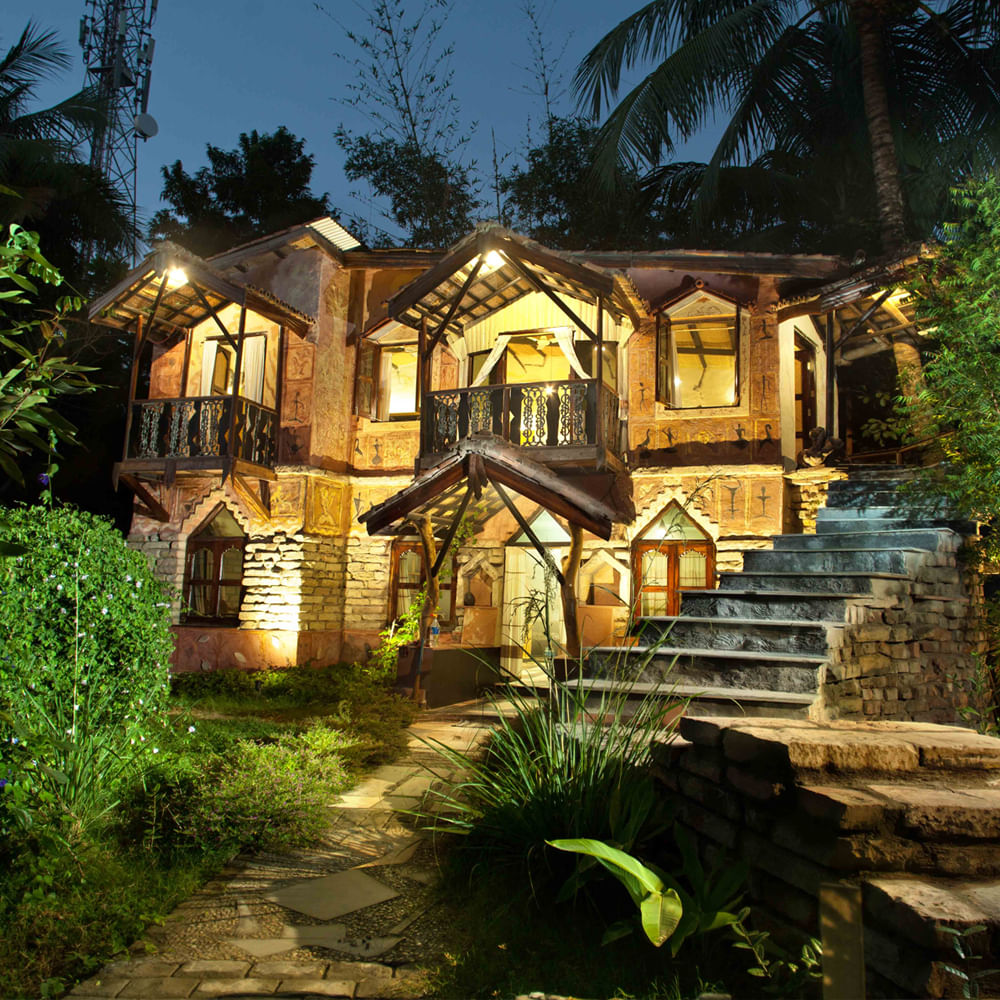
Jalpath, an eco-resort, is encircled by vegetation, birds, a lagoon, and all things revitalising. You can fully disconnect and immerse yourself in country life with its handloom corners, ceramics, and slow-living moments. Jalpath is located among the East Calcutta Wetlands at Bantala. It lies en route to Basanti, the entry point to the Sundarbans, the biggest mangrove forest in the world. Historically, this area served as a navigation route for the domestic and international trade of spices and several other necessities. Jalpath offers visitors the chance to see organic farming in addition to two cottages. Additionally, Jalpath gives you a pit loom with jacquard facilities, yarn spinning and design capabilities, natural thread and fabric dyeing using non-toxic natural dyes, metal casting utilising the lost wax process, and the creation of typical dokra art items.
Best Time To Visit: October to March
Things To Do: Explore local weaving studios and homes, get to see lost-wax brass crafting, block printing, natural dyeing, and enjoy the locally curated dine-in menu by the eco resort
How To Reach: From Kolkata, it takes roughly an hour to get to Jalpath via Garia and Bonogram. Another option is to take the metro to Kavi Nazrul, then take an auto to Bonogram. It's hidden in the vegetation, so use Google Maps or give them a call in advance.
LBB Tip: Bring lightweight, long-sleeved clothes and insect repellent
Giridih
Giridih District in Jharkhand is renowned for its rich cultural heritage and stunning natural surroundings. The state's highest peak, Parasnath Hill, is located there and is well-liked by pilgrims and visitors alike. Of the 24 Jain Tirthankaras, 20 are said to have reached nirvana on the hill. Set in a canyon surrounded by forested hills, Usri Falls is a charming three-tiered cascade. Boating, bird watching, and adventure sports like ziplining and rock climbing are all available at Khandoli Dam. For bird lovers, the region surrounding the dam is excellent since it draws migratory birds in the winter. Located at the base of Parasnath Hill, Madhuban is a village that is home to medieval Jain temples and ashrams. While Jharkhandi Dham is a lesser-known one, it's an inviting spot to learn about local culture and spirituality.
Best Time To Visit: October to March, July to September
Things To Do: Hiking, trekking, water sports, visiting all 31 temples
How To Reach: Howrah and Giridih are connected by a few direct trains. As an alternative, you can travel to Parasnath Station via train. It takes six to eight hours to drive or rent a car. Numerous buses, both public and private, are available. Another option is to fly to Ranchi and then take a bus or taxi.
Raichak
Raichak is a tiny community with a port. The town was once a central hub for the trade of betel leaves and salt, and it grew to become a significant hub for the jute trade during the British colonial era. It is home to the Raichak Fort, a magnificent hotel and spa built in a former colonial fort. Diamond Harbour, renowned for its historical charm and scenic beauty, is about 15 miles away. Gadiara, at the meeting point of the Hooghly and Rupnarayan rivers, is an excellent place for a relaxed picnic. Nearby is the Mughal-era Chingrikhali Fort, which is situated on the banks of the Hooghly River. About 100 km away, the Sundarbans entice the daring with their renowned tiger reserve, abundant wildlife, and impenetrable mangroves.
Best Time To Visit: October to March
Things To Do: Jetty and ferry rides, visit the Diamond Harbour Lighthouse, see the Chingrikhali Fort, visit Ramkrishna Mission Ashram, shop at Jayanagar Market.
How To Reach: It'll take two hours by road, or you can opt for private buses.
Serampore
A riverbank town where Bengali history and Danish influences coexist. You have the exquisitely renovated 1806 St Olav's Church, which is at peace and quiet, and still has a lot of historical charm. Then there's the sprawling Serampore Rajbari, which has a dramatic old-school Durga Puja ambience and royal arches. Visit the Henry Martyn Pagoda for views of the river and some silent ruins. If you enjoy old books and fascinating stories, Serampore College, founded by William Carey, houses a museum and India's first printing machine. The cemeteries, both Danish and missionary, are pleasant little historical sites. If you enjoy unhurried walks, stories waiting to be unearthed, and hidden jewels with vintage appeal, you should go to Serampore.
Best Time To Visit: October to March, and April to June
Things To Do: Eat at the Danish Tavern, which serves Danish-style sausages and Danish pastries. Visit the Danish Cemetery, Mission Cemetery, and Henry Martyn Pagoda.
How To Reach: You can reach here by car, as it should take roughly one and a half hours to drive. Some trains run between Howrah and Serampore. Board at the Howrah Jn station and deboard at Serampore station.
Puri
Puri, located on the coast of Bengal, is an intriguing destination, particularly for families seeking a trip. Explore a market that features traditional art and rituals, enjoy the beaches, and visit well-known religious locations like the Konark Sun Temple. Puri Beach, sometimes referred to as Golden Beach, is the most renowned beach in Puri. It provides a wide range of thrilling water activities for both children and adults.
Best Time To Visit: October to March
Things To Do: Buy khaja or get it as prasad from the Jagannath temple, eat local food, take a walk by Chandrabhaga beach, and visit the Konark Sun temple.
How To Reach: You can take a direct bus to Puri from Kolkata, which will cost you INR 330. Alternatively, you can opt for a direct bus.
LBB Tip: Book a stay at BNR Hotel Puri. It is the only heritage hotel in the region.
Murshidabad
On the banks of the Bhagirathi River in West Bengal, Murshidabad is a historic town. Named for Nawab Murshid Quli Khan, it served as the capital of undivided Bengal until 1717, when the British moved it to Calcutta in 1773. The town is famous for the Battle of Plassey (1757), which marked the beginning of British administration in India and saw the British beat Nawab Siraj-ud-Daulah through treachery despite having fewer troops. Key sights include the enormous Nizamat Imambara mosque across from the palace, the Footi Mosque, Wasif Manzil, the modest Madina Mosque, and the Hazarduari Palace (Palace of a Thousand Doors), which is now a museum containing royal treasures.
Best Time To Visit: October to March
Things To Do: Visit the Battle of Plassey grounds and Hazarduari Palace
How To Reach: It takes around 3 hours to reach by car, and there are multiple private and public buses available for booking.
Taki
Taki, located on the banks of the Ichamati River, which separates India and Bangladesh, is a town with lush paddy fields and dazzling ponds. Every year, it, like the rest of West Bengal, changes into a brilliant hub of Durga Puja festivities. The Epar Bangla Opar Bangla Devi Visharjan Darshan represents Bengal's rich cultural tapestry and harmony, representing the merging of Epar Bangla (West Bengal) and Opar Bangla (Bangladesh) in a joint devotion to the goddess. During this auspicious occasion, devotees gather in lively processions, proudly carrying exquisitely carved Durga idols.
Best Time To Visit: June to Dec
Things To Do: Boat rides on the Ichamati river, nature walks around Golpata forest, visit historical zamindar estates like Puberi Bari and Roychowdhury Zamindar House
How To Reach: You can reach Taki by car in about 2 hours. If you prefer taking the train, catch the Hasnabad local from Sealdah station, which will also take around 2 hours. By road, you can drive or take a bus from Esplanade.
Bandel
Visit Bandel to experience the service at St Basilica, a church you shouldn’t miss. The Doric-style church with its open spaces and beautiful paintings is the best example of the Portuguese influence in Bandel. It was one of the first churches built in Bengal! From a distance, you can see the graceful minarets of the Hooghly Imambara, which was constructed in 1861. Admire the Islamic calligraphy on the walls and the old clocks. The prayer hall with coloured glass and marbles in black and white wins. It is famous for its stunning clock, which was purchased from M/s Black & Hurray Co., the manufacturers of Big Ben in London, in 1852. Its large bell chimes every hour, while the smaller ones do so every 15 minutes. Using a 20 kg key, winding it takes two people 30 minutes per week!
Best Time To Visit: October to February, and April to June
Things To Do: Check out Felu Modak. It serves great sandesh, kalojam, malai rabri and mango malai rabri, visiting Hooghly Imambara, St Basilica, Bandel church
How To Reach: Local trains from Howrah, which run regularly and take around 40 minutes, make it easy to go to Bandel, which is roughly 40 to 50 km from Kolkata. Depending on traffic, driving the NH-2 or using an Uber or Ola will take approximately one hour.
Mayapur
A city of ancient temples and myths. It is one of the nine islands that form the Navadweep (that looks like a lotus flower with eight petals) and is situated just at the confluence of the Ganga and Jalangi rivers. It’s a well-known pilgrimage place attracting tourists and devotees from across the world. It’s believed that Sri Chaitanya Mahaprabhu, Lord Krishna’s incarnate, was born here, which is why there’s also a temple dedicated to him. The famous ISKCON temple is also here.
Best Time To Visit: February to March, and November to March
Things To Do: Ancient temples, local culture, and local food. Spend a day at the ISCKON temple.
How To Reach: From Gariahat or Tollygunge, you can drive. Another option is to take a train from Howrah or Sealdah to Nabadwip Dham, from where you can catch a quick rickshaw and a boat across the Ganga to Mayapur.
LBB Tip: Visits during the Gaura Purnima festival also offer vibrant processions, cultural performances, and an energetic atmosphere!