
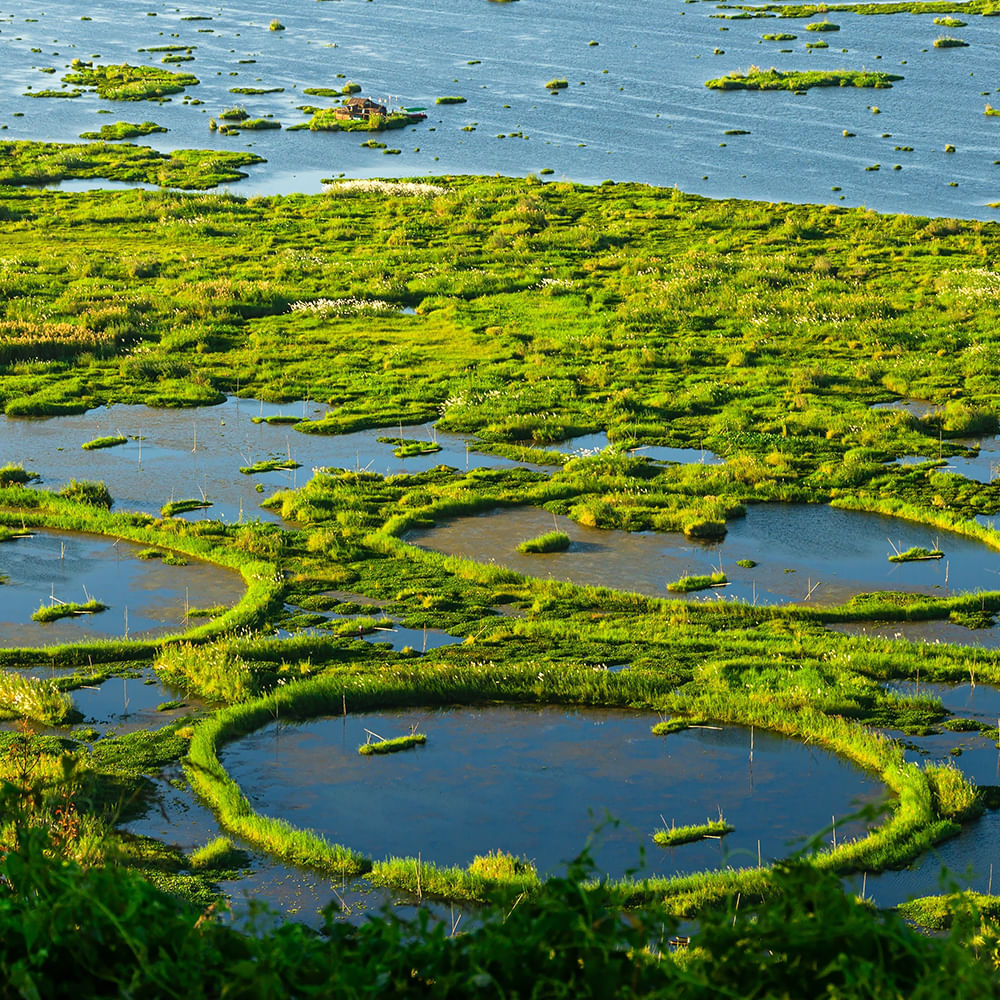
India has many natural jewels, but only a handful quietly shine on the world map. Loktak Lake in Manipur is one of those rare gems. It's the largest freshwater lake in Northeast India, but what truly makes it magical is that it’s the world’s only floating lake. Not an exaggeration—I double-checked more times than I’d like to admit. Its floating islands, known as Phumdis, are made of tangled vegetation, soil, and organic matter. What looks like a natural wonder straight out of a fantasy film actually supports a rich and thriving ecosystem.
One of the most fascinating things about Loktak is that it gave the world an entirely new species of glassfish—Parambassis waikhomi—previously unknown to science. It still blows my mind. So if you ever find yourself in Manipur, Loktak Lake isn’t just something to add to your list. It is the list, a non-negotiable. And there’s plenty to do once you're there. Head to the Takmu Water Sports Complex for windsurfing, sailboating, water skiing, or a slow, scenic bamboo boat ride. Whether you’re an adrenaline junkie or just want to float along peacefully, the lake doesn’t disappoint.
Within the lake lies Keibul Lamjao National Park, another global one-of-a-kind—it’s the only floating national park in the world and the last natural home of the Sangai, the shy deer that locals lovingly call the “dancing deer” of Manipur. Even a fleeting glimpse of one, stepping across a phumdi, stays with you. If you're lucky, you might also spot hog deer, otters, and flocks of migratory birds.
Loktak is more than just a postcard-perfect destination. It’s deeply ingrained into the daily life of Manipur. Fishing along its shores sustains many local families, while the lake also supports agriculture, irrigation, and hydropower. It’s not just beautiful—it’s vital.
