
10 Stargazing Spots In India To Make Your Next Wish On A Shooting Star

535 Interested |
5.2K  Views

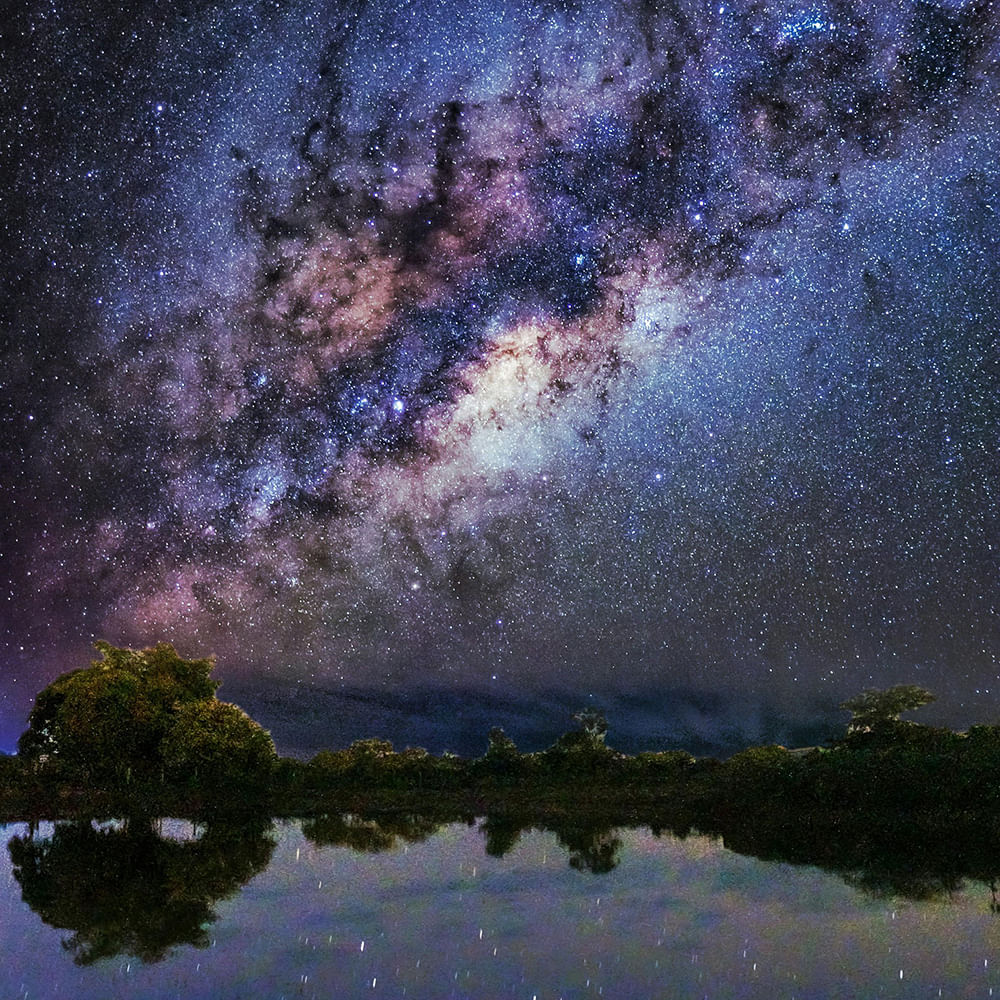
Stargazing has lately become a foreign concept, no thanks to our pollution and 'barely-making-it-out-of-bed' seasonal hibernation. For someone like me who has had her gaze on the stars since childhood, it's a sad reality that I can now count the number of stars in the sky, because the number is mostly between 0-1.

Lucky for us, India has certain corners where the stars still shine their best for calm explorers and intrigued wanderers. These stargazing spots in India guarantee clear skies, HD quality spread of stars, and a surreal experience (though a telescope would elevate that experience, so we suggest you carry one). 

Read on for the best stargazing places in India that will make all your 'twinkle, twinkle little star' dreams come true!

Top Places For Stargazing In India In 2025

Hanle, Ladakh

Hanle is the best place to start your stargazing journey in India. It is home to the Indian Astronomical Observatory (one of the world's highest observatories) and India's first Dark Sky Reserve. Due to its high altitude, dry climate, and minimal light pollution, it offers the best view of the stars. Being a remote, underrated village in Ladakh, chances are you will strike gold (or should we say starlight) in the solace department. The best part? On a clear night, you can spot even the Milky Way, along with several constellations, planets and nebulae. 

Best time to visit: March to October (summer and autumn months are generally more accessible)

How to reach: The closest airport is Leh, from where Hanle is an 8-hour drive away towards higher altitudes. 

LBB tip: Please note that Inner Line Permits are required for foreign nationals and sometimes, also for Indian citizens, to visit this region.

Pro tip: Here's the ultimate Ladakh guide. 

Spiti Valley, Himachal Pradesh

Commonly referred to as 'Little Tibet', Spiti Valley is a cold desert located at an altitude, thanks to which it is known for its clear and unpolluted skies. Its villages, such as Kaza, Kibber, Dhankar, and Langza, give stunning views of the Milky Way and constellations Ursa Major, Scorpius, Orion, and many others, and are a great base for astrophotography. If you are interested in knowing more about identifying stars, planets, and constellations, the government of Himachal Pradesh has also begun astro-tourism initiatives in Kaza, providing high-end telescopes and training people to conduct guided sessions.

Best time to visit: May to June and October to November for better road accessibility and clear skies. 

How to reach: The closest airport is Shimla, from where you can take a cab./bus to Spiti Valley, via the Kinnaur Valley. 

Rann of Kutch, Gujarat

Rann of Kutch is a tremendous white salt flat that doubles as a surreal stargazing paradise. A lot of my traveler friends note that the flat levelling and lack of light pollution here make for a clean night sky, and at times, you will see the stars reflecting on the salt flats. If (un)lucky, you will also catch glimpses of the rumoured 'Chir Bhatti' or ghost lights.

Best time to visit: November to February, during the winter season. This also coincides with the Rann Utsav festival.

How to reach: The nearest airport and railway station are in Bhuj. From Bhuj, you can hire a taxi or take a bus to Dhordo, which is the gateway to the Rann.

Pangong Tso, Ladakh

If you have imagined watching the stars and the moon reflect on the puddles of a lake, then this stargazing location in India is just for you. Pangong Tso in Ladakh is a high-altitude saltwater lake, which makes for a beautiful frame for admiring the stars. The reflection of the stars on its waters makes it painstakingly gorgeous that you will not be thinking of anything else at the sight. Its remoteness means less light pollution, so get your telescopes set. 

Best time to visit: April, May, September, and October, when the lake is accessible and skies are generally clear.

How to reach: Fly to Leh and then hire a taxi. The drive to Pangong Tso is incredibly scenic but can be long. 

Thar Desert, Jaisalmer

The sparkling clean sands of the Thar Desert provide an unbelievable and beautiful setting for stargazing. There are remote, dark skies and no city lights in places like Sam Sand Dunes and Khuri Village. You can take a desert safari under the stars and even set camp in the solitude of a magical sky. Most desert safari packages also help you with stargazing sessions. 

Best time to visit: October to March, during the cooler winter months, for clear skies and pleasant weather.

How to reach: Jaisalmer has a railway station and a domestic airport. You can hire a jeep or a taxi from Jaisalmer to reach the sand dunes for desert camps.

Coorg, Karnataka

Situated in the Western Ghats of India, Coorg (Kodagu) offers a light-pollution-free and calming environment that makes for the best stargazing session in India. It also has a generally brightening sky patch around elevations like the Tadiandamol Peak, and is a good locality for stargazing in South India. The place also has a lot of eco-lodges and homestays in Coorg, where you can put up, that are perfect for stargazing. Some resorts or dedicated observatories (such as Starscapes Observatory in Coorg) host guided stargazing sessions if you wish to delve deeper. 

Best time to visit: October to May. Avoid the monsoon season (June to September) as cloud cover will obstruct views.

How to reach: The nearest airports are Mysore, Mangaluru, and Bengaluru. From there, you can take a bus or hire a taxi to Coorg.

Havelock, Andaman Islands

Stargazing on an island? It only gets better from here. Beyond dreamy and clean beaches, the Andaman and Nicobar islands boast a clear, outstanding sky, thanks to their remote location and no light pollution. Here, you can also create some of those cool astro time-lapse videos! No wonder they have been called the 'galaxy point in India', as you can view the Milky Way on clear nights, only made better with the babble of the waves crashing onto the shores. 

Best time to visit: During the dry season, from November to March, for clear skies and unobstructed views. 

How to reach: The nearest airport is Port Blair, from where you can take a cruise to Havelock. 

Bhandardara, Maharashtra

Bhandardara is a popular weekend escape for those living in Mumbai and Pune because they have relatively dark skies and less chaos than the city, especially surrounding Arthur Lake and the nearby campsites. This place is considered to be one of the darkest points in Maharashtra, and so, reasonably ideal for viewing the Milky Way and many other deep-sky objects. You will also find many organisers here who provide guided stargazing camps.

Best time to visit: October to March (dry and cooler months).

How to reach: The nearest railway station is Igatpuri. From Igatpuri, you can hire a taxi or take a local bus to Bhandardara. It's also easily accessible by road from Mumbai and Pune.

Pro tip: Here's our complete Bhandardara guide! 

Lachen and Lachung, Sikkim

These remote hamlets in north Sikkim boast pristine, unpolluted skies as they're situated literally at the foot of the Himalayan Mountains. Their high altitude and sparse population usually result in great, visible skies. Now, while Lachen and Lachung might have a few local lights, you only need to move slightly outside of the main village sites to gain darker skies for a better vision of the stars. 

Best time to visit: March to May (spring) and September to November (autumn), for clearer skies and accessible roads.

How to reach: Fly to Bagdogra (the nearest airport in West Bengal) or take a train to New Jalpaiguri (NJP). From here, you can hire a taxi to Gangtok, where you'll need to obtain permits to visit North Sikkim and then visit using a local vehicle.

LBB tip: You can make it a complete trip by combining stargazing with visits to Gurudongmar Lake (from Lachen) or Yumthang Valley (from Lachung). This Sikkim guide will help you! 

Sona Marg, J&K

Sona Marg, also known as the 'Meadow of Gold,' is a beautiful valley in the Himalayas. Due to its high altitude, high open expanses, and remoteness from major cities, it has dark skies and provides brilliant views of the Milky Way and other galactic features. Heads up, the temperatures can fall rapidly during the night, so stock up on warmer clothes. You can also camp under the stars here. 

Best time to visit: May to October (summer and autumn). Winter access is usually restricted due to heavy snowfall.

How to reach: Fly to Srinagar from where you can hire a taxi to Sonamarg.

Tips For Stargazing In India

1. Always check the moon calendar and plan your visit for a new moon or crescent moon phase, where the skies are darkest. 

2. If you are heading to Ladakh/Spiti or high-altitude parts of Uttarakhand/Sikkim, take a day or two in a place at a lower elevation (such as Leh if you are going to Ladakh) and acclimatise to avoid altitude sickness.

3. For regions such as Ladakh and Sikkim, Indian nationals are required to possess Inner Line Permits (ILP), and a Protected Area Permit (PAP) is necessary for foreign nationals. If you have permits to acquire, get these in advance.  

4. It is important to check road conditions ahead of your trip as landslides or heavy snowfall can frequently happen, especially in high-altitude areas, leading to closures.

5. If you really want to have the best stargazing experience, particularly in more remote areas, it is always an advantage to book a local guide or join a local tour that specialises in stargazing events. They usually know the best spots, as well as having the equipment, such as telescopes for stargazing.

6. For astrophotography, make sure to pack a good quality tripod, a wide-angle lens, and a remote shutter release.

img-user-niveditha-kalyanaraman-353843539797
91 Followers

Caffeine and poetry: that's my world. Love exploring new places, new products and binge watching comfort shows. Journalist. Writer. Feminist. Dreamer. Swiftie. Have nurtured 4 years of experience in all things content and looking to nurture more :)