
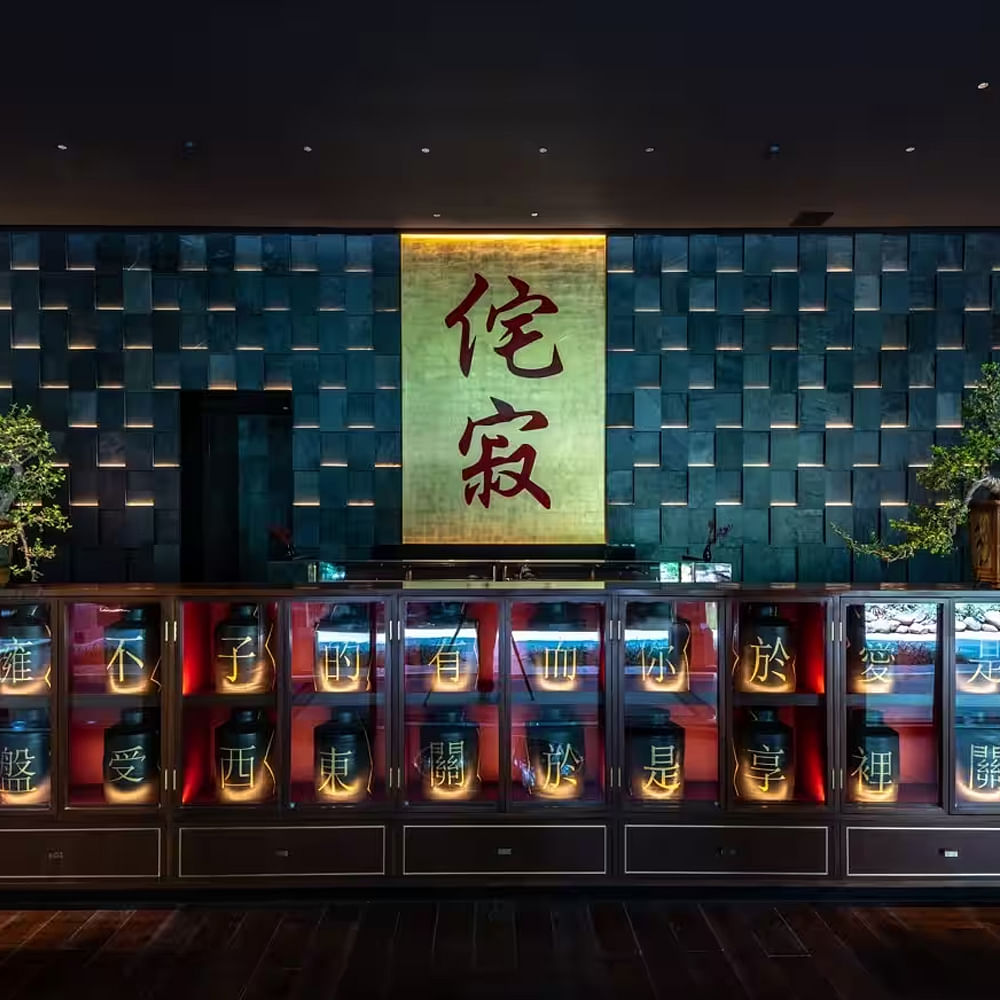
Dramatically Asian is what Wabi Sabi calls itself, despite the Japanese look and feel. And the last time we dined at Wabi Sabi was when Chef Randy had introduced a new menu featuring Nikkei cuisine for the discerning palate. This time around, Senior Sous Chef and Wabi Sabi Co-Lead, Ablu Bhowmick, has introduced a new Chinese menu to go along with Chef Randy’s line-up of dishes such as the Yellow-Tail Ceviche, Salmon Tataki, Chilled Kuzu Noodle Salad, and Pork Miso Ramen.
We started our lunch with a curated menu that the chef had put together, featuring about 10 dishes that highlight the new menu. We started with the Tofu & Three Jades, a light soup with a tofu flower and some greens. In an almost course-by-course format, the next couple of dishes that arrived on the table included the Tenderloin and Bone, Duck Taro Puff, and Pork Belly. The tenderloin was served with a tataki format, keeping up with the Japanese vibe of the space, with bone marrow glaze and goma-dari sauce, which is a sesame sauce. While the dish didn’t feel Chinese, it nonetheless was mopped clean in a matter of a few minutes. The Pork Belly and the puff brought in the Chinese flavours, specifically the Sichuan flavours. The twice-cooked pork was crispy as advertised, and we loved the sharp Mala sauce topping. The savoury puffs with the roasted duck filling reminded us a bit of Peking duck.
For mains, it was the Chengdu-style Dan Dan Noodles and Truffle Fried Rice with A Filipino Traveller’s Chicken. The interesting twist to the Dan Dan noodles was the use of udon noodles, but we see why that choice was made — there’s more bite, and the sauce retention is higher. We shamelessly didn’t share it with our plus one. The chicken, despite the name, was top-tier in flavour with the soy and Chianking vinegar. The chicken itself? Poached to that juicy texture.
We wrapped up our meal with the Wabi Sabi Caviar Box that features crunchy chocolate pearls topped on a banana creameux. The best part? The whole dessert, including the box, was edible.
